Founder Case Studies: How Big Brands Really Started
Most famous companies began with a small, slightly odd first move: a borrowed garage, a correspondence course, a mortgaged house. These short case studies stick to documented facts and pull out one lesson from each.
Every card links to where we checked the details. Numbers are the ones reported at the time, not adjusted unless we say so.
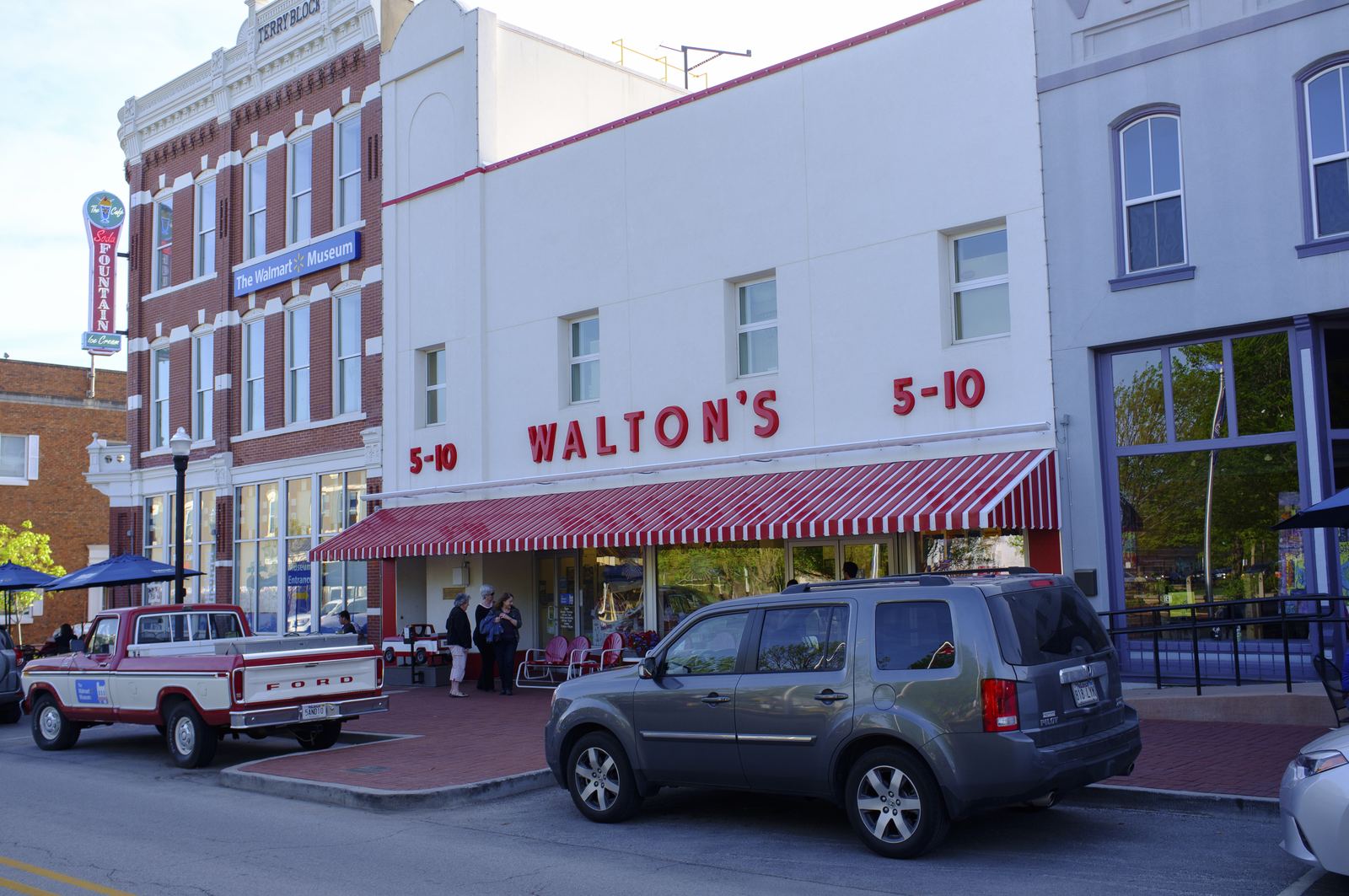
Walton's 5-10, Bentonville, Arkansas: Russ, CC BY 2.0
Eight founders, eight first moves
Short, sourced snapshots. Want the long version? Our full stories on Nike, Spanx, Walmart, Amazon and more live in the Founder Stories section.
Hewlett-Packard: the $538 garage
Bill Hewlett and David Packard started in a Palo Alto garage with a small pot of cash. Their first product was an audio oscillator, and one of their earliest customers was Walt Disney Studios, which bought eight of them to help produce the sound for Fantasia. A narrow, precise product with a demanding buyer gave them a reputation before they had scale.
- Founded
- 1939, Palo Alto, California
- Starting money
- $538
- First product
- HP 200A audio oscillator
- Early customer
- Walt Disney Studios
- Lesson
- Win one demanding customer first
Ben & Jerry's: ice cream in an old gas station
Childhood friends Ben Cohen and Jerry Greenfield took a correspondence course in ice cream making from Penn State's creamery, then opened a scoop shop in a renovated gas station in Burlington, Vermont. Cohen has almost no sense of smell, so he cared about texture, which helped lead to the big chunks the brand is known for.
- Founded
- 1978, Burlington, Vermont
- Starting money
- $12,000
- Training
- Penn State correspondence course
- Signature
- Big chunks and mix-ins
- Lesson
- Turn a limitation into a signature
Dell: selling PCs from a dorm room
Michael Dell started PC's Limited while a student at the University of Texas at Austin, with about $1,000 from family. Instead of selling through stores, the company sold directly to customers and built machines to order, which let it price aggressively and skip the retail middleman.
- Founded
- 1984, Austin, Texas
- Starting money
- About $1,000
- Original name
- PC's Limited
- Model
- Direct to customer, built to order
- Lesson
- Cut out a costly step in the chain
Patagonia: climber first, company second
Yvon Chouinard began by selling hand-forged climbing gear in 1957 and later launched Patagonia for clothing. Since 1985 the company has given 1 percent of sales to environmental groups, and in 2022 Chouinard moved ownership to a trust and a nonprofit so profits go toward climate and conservation work.
- Started selling gear
- 1957
- Patagonia founded
- 1973, Ventura, California
- 1% of sales pledge
- Since 1985
- Ownership change
- September 2022
- Lesson
- Build what you use and know deeply
Oprah Winfrey and Harpo: owning the show
Oprah Winfrey founded Harpo Productions in 1986, and in 1988 the company took ownership of The Oprah Winfrey Show from the Chicago station that had produced it. Owning the show, rather than only hosting it, gave her control and a much larger share of what it earned. Harpo is Oprah spelled backwards.
- Founded
- 1986, Chicago
- Key move
- Acquired her own show in 1988
- Name
- Oprah spelled backwards
- Moved to
- West Hollywood in 2015
- Lesson
- Own the asset, not just the job
FUBU: a house that was half factory
Daymond John and three friends from Queens started FUBU, short for For Us, By Us. John mortgaged his home for $100,000 and turned half of it into a workspace. A big publicity break came in 1997 when LL Cool J wore a FUBU hat and slipped the slogan into a Gap commercial.
- Founded
- 1992, Queens, New York
- Founders
- Daymond John, Carlton Brown, J. Alexander Martin, Keith Perrin
- Funding
- $100,000 home mortgage
- Big break
- 1997 Gap ad with LL Cool J
- Lesson
- Know your community and sell to it
Mortgaging a home is a serious personal risk. This is history, not a suggestion.
Starbucks: Howard Schultz's coffee bar idea
Starbucks opened in Seattle in 1971 selling coffee beans. Howard Schultz joined in 1982 and pushed to sell brewed coffee. He left to start Il Giornale, a cafe inspired by Italian espresso bars, then bought the original Starbucks chain in 1987 and put his cafes under the Starbucks name.
- Starbucks founded
- 1971, Seattle
- Schultz joined
- 1982
- Il Giornale
- 1985
- Bought Starbucks
- 1987
- Lesson
- Sell the experience, not just the product
Mary Kay: a sales force as the product
Mary Kay Ash launched her cosmetics company in Dallas in 1963 and built it around independent beauty consultants. In 1968 she bought a pink Cadillac as a rolling advertisement, and the next year began rewarding top sellers with cars painted the same color, turning recognition into a famous incentive.
- Founded
- 1963, Dallas, Texas
- First year
- 318 consultants
- First year sales
- $198,154
- Pink Cadillac
- First bought in 1968
- Lesson
- Reward people in ways they can show off
Patterns worth noticing
Almost none of these founders started with a big round of funding. They started with a narrow product, a specific customer, or a simple change to how something was sold. Dell removed the store. Harpo took ownership. Mary Kay turned recognition into motivation.
Also notice the risk. Some of these stories involve personal loans, mortgages and years of slow growth. Survivors get the headlines, and many similar attempts failed quietly. Treat these as ideas to study, not a script to copy.
Educational content only, not financial or investment advice. Facts are drawn from the linked sources and may be simplified.
- Wikipedia: Hewlett-Packard
- Wikipedia: Ben & Jerry's
- Wikipedia: Dell
- Wikipedia: Patagonia, Inc.
- Wikipedia: Harpo Productions
- Wikipedia: FUBU
- Wikipedia: Starbucks
- Wikipedia: Mary Kay
Facts on this page were checked against these sources (updated Oct 1, 2026). Spot an error? Email hello@fireempireshop.com.
.jpg)