
Index Funds and Jack Bogle
Owning the whole market, cheaply. Jack Bogle launched the first index mutual fund for individual investors in 1976. Here is how index funds work and why low costs matter.
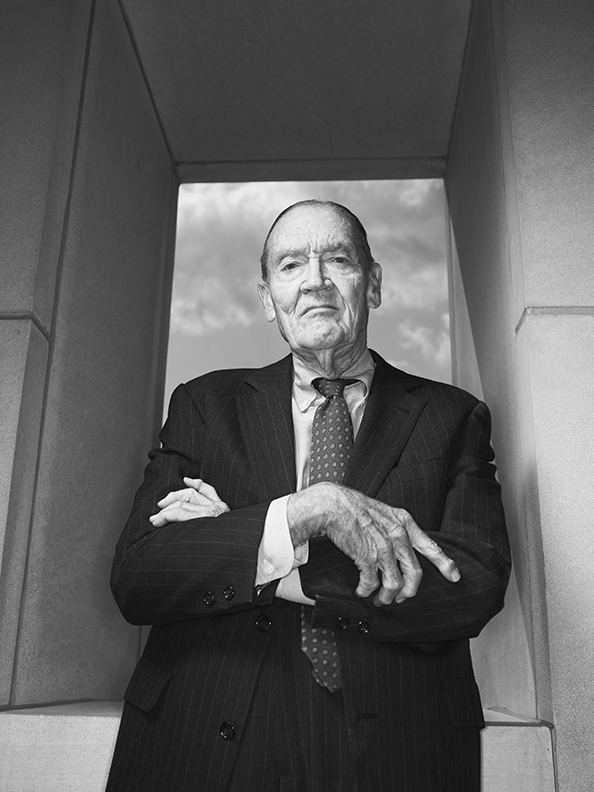
John C. Bogle: BillCramer, CC BY-SA 4.0
The man and the mutual idea
Jack Bogle wrote his 1951 Princeton senior thesis on the mutual fund industry and spent decades working in it. After being fired from Wellington Management in 1974, he founded the Vanguard Group, which began operating in 1975. He structured it so the funds own the company, meaning profits can flow back to investors as lower fees.
In 1976 Vanguard launched the First Index Investment Trust, which aimed simply to match the S&P 500. Wall Street mocked it as Bogle's folly, and the first offering raised only about $11 million. That fund became today's Vanguard 500 Index Fund, one of the largest funds in the world.
Video: Legendary John Bogle Shares the Investment Lessons of a Lifetime (Historical) (WEALTHTRACK), embedded from YouTube.
How an index fund works
An index is a list of investments, such as the 500 large US companies in the S&P 500. An index fund buys all, or a representative sample, of what is on the list. There is no star manager picking winners, so trading and research costs stay low.
Because it owns the market, an index fund aims to earn roughly the market's return, minus a small fee. It is not designed to beat its index, but it should not badly trail it either.
Why costs matter so much
Bogle's central argument was arithmetic. Before costs, all investors together earn the market's return. After costs, the average investor must earn less. So, he argued, the cheapest way to own the market tends to beat the average expensive way over long periods.
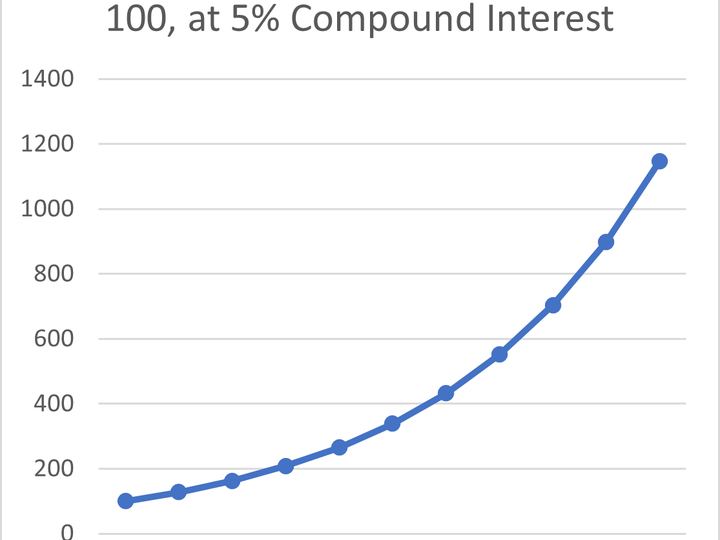
Reports from S&P Dow Jones Indices have repeatedly found that most actively managed US stock funds trail their benchmark indexes over long periods. Its year-end 2025 scorecard found that about 90 percent of active large-cap US funds lagged the S&P 500 over 15 years. That is past data, not a guarantee of what comes next. A difference of 1 percent a year in fees, compounded over decades, can add up to a large share of an investor's final balance.
Index funds come in many flavors today, tracking total stock markets, international markets, bonds and narrow sectors. They are available as traditional mutual funds and as exchange-traded funds, or ETFs, which trade on an exchange like a stock throughout the day.
Limits and lessons
Index funds still rise and fall with markets, sometimes sharply, and owning only one index can leave gaps in diversification. Bogle himself framed them as a tool for patient, long-term investors who can ignore short-term noise. Bogle died in January 2019, having helped push fees down across the whole industry.
Not financial advice: this page is general education, not a recommendation for your personal situation. Talk to a licensed professional before making money decisions.

- Vanguard: 50 years, 50 facts, indexing since 1976
- Morningstar: The Index Fund Turns 50
- S&P Dow Jones Indices: U.S. Persistence Scorecard Year-End 2025
- InvestmentNews: Active managers stumble again in 2025 as large caps dominate
Facts on this page were checked against these sources.
- John C. Bogle: BillCramer, CC BY-SA 4.0
- New York Stock Exchange trading floor: Carol M. Highsmith, Public domain
Text written by Biggest Bossman.






_(6718386525).jpg)